You see charity partnerships everywhere – from local supermarket fundraisers to major airlines collecting your leftover Euros on a flight home. Sometimes you may not even notice them, or remember what the cause was! But what do we really mean when we describe something as a charity partnership? And how do you know when you’ve found a good one?
In it’s most simple form, a charity partnership is when a company agrees to support a specific charity with money, publicity, or shared programmes. This might be with their staff through a simple fundraiser or it might be a multi-year plan using all their expertise . Some of them are really successful and do a huge amount of good… some of them not so much!
A great charity partnership is obviously about more than just funding and exposure. Those two things are very welcome, but without something more meaningful a partnership risks looking hollow or opportunistic.
I think in the world of charity marketing, the true meaning of the word “partnership” sometimes gets overlooked – because a great partnership is not just mutually beneficial, it’s collaborative.
So when we first started exploring the idea of a partnership between the Ernest Cook Trust and Diddly Squat Farm I was really interested to understand what it could look like. At first glance you might think there wasn’t much collaborative potential between an outdoor learning charity and a famous TV farm business…
There’s no arguing that a major British brand like Diddly Squat Farm, with its huge reach and celebrity profile and its own TV show, could bring some pretty major exposure to a relatively small outdoor learning charity – but is that really a partnership? You can argue that there’s no such thing as bad publicity but you need some audience overlap to make that publicity really meaningful. And as a grant maker ourselves we know that funding is critical, but that it can also be amplified and strengthened by a connection that’s more than just transactional.
So we were very happy to become their charity partner for their range with Ocado – where 10p from every item sold is donated to the Trust, up to £20,000. And Ocado is a great part of this collaboration, as they’re always looking for ways to support British products and expand the choice of local produce for their customers. So there is an alignment in our values and purpose behind this funding.
But we’re even happier that there is more to it than “just” a donation.
It’s genuinely exciting that we’re also exploring a wider partnership with Diddly Squat Farm – and I use the word “exploring” because it’s a collaborative opportunity that we’re working on together.
For now, we’re thrilled to be their charity partner in their range with Ocado, but in the future, we look forward to working together to help connect young people to their local landscapes, food systems, and potential careers outdoors. Because there is the potential for huge learnings on both sides and a collaboration that amplifies our own strengths and expertise for a shared purpose.
Diddly Squat has always been about celebrating British farming in a hands-on, practical way, from what we grow to how we share it with people. Supporting the wider farming community, particularly by helping more young people engage with agriculture and understand the value of British produce, is central to what we set out to do.
Lisa Hogan, co-founder of Diddly Squat Farm.
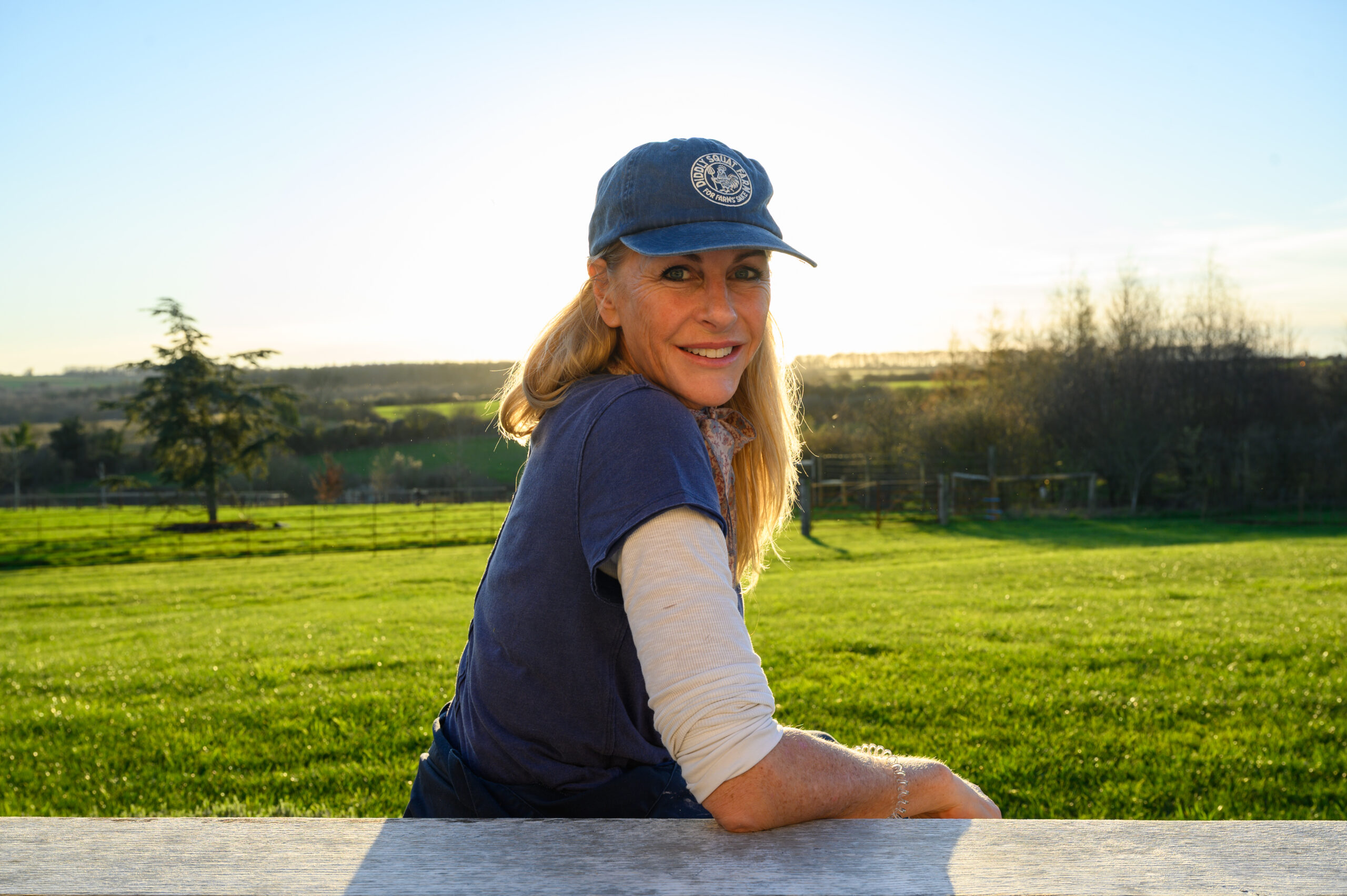
For all its reach, celebrity profile and TV ratings, Diddly Squat Farm is really, at its heart, a local business that’s committed to its community. The organisation is genuine in its support for the farming sector, farmers, and young people’s futures on the land. And we are part of a shared environment that thrives on local connections and learning.
That shared ambition means more than funding and exposure, and it feels like a great place to start.