Meet Harry
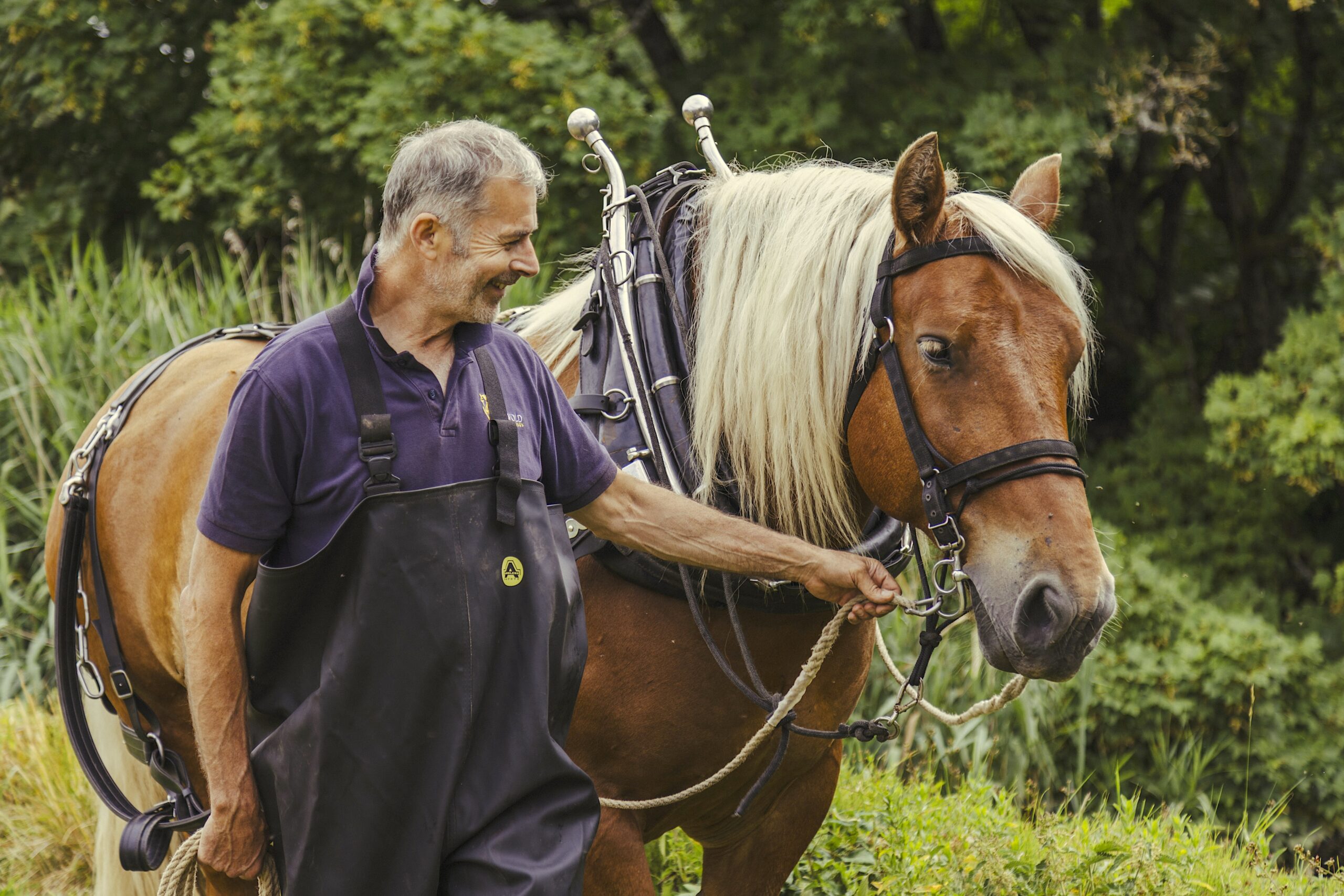
Harry is the French Comptois heavy horse who is fast becoming one of the Trust’s most appreciated helpers. Previously – as documented on this website blog page – he has quite literally been the horsepower helping our estate team clear coppiced woodland in the winter months.
It was during these woodland conservation activities that our River Keeper, Mark, impressed by Harry’s natural abilities, had an idea: Could he be used on the nearby River Coln to help prepare the riverbed for the next trout spawning season?
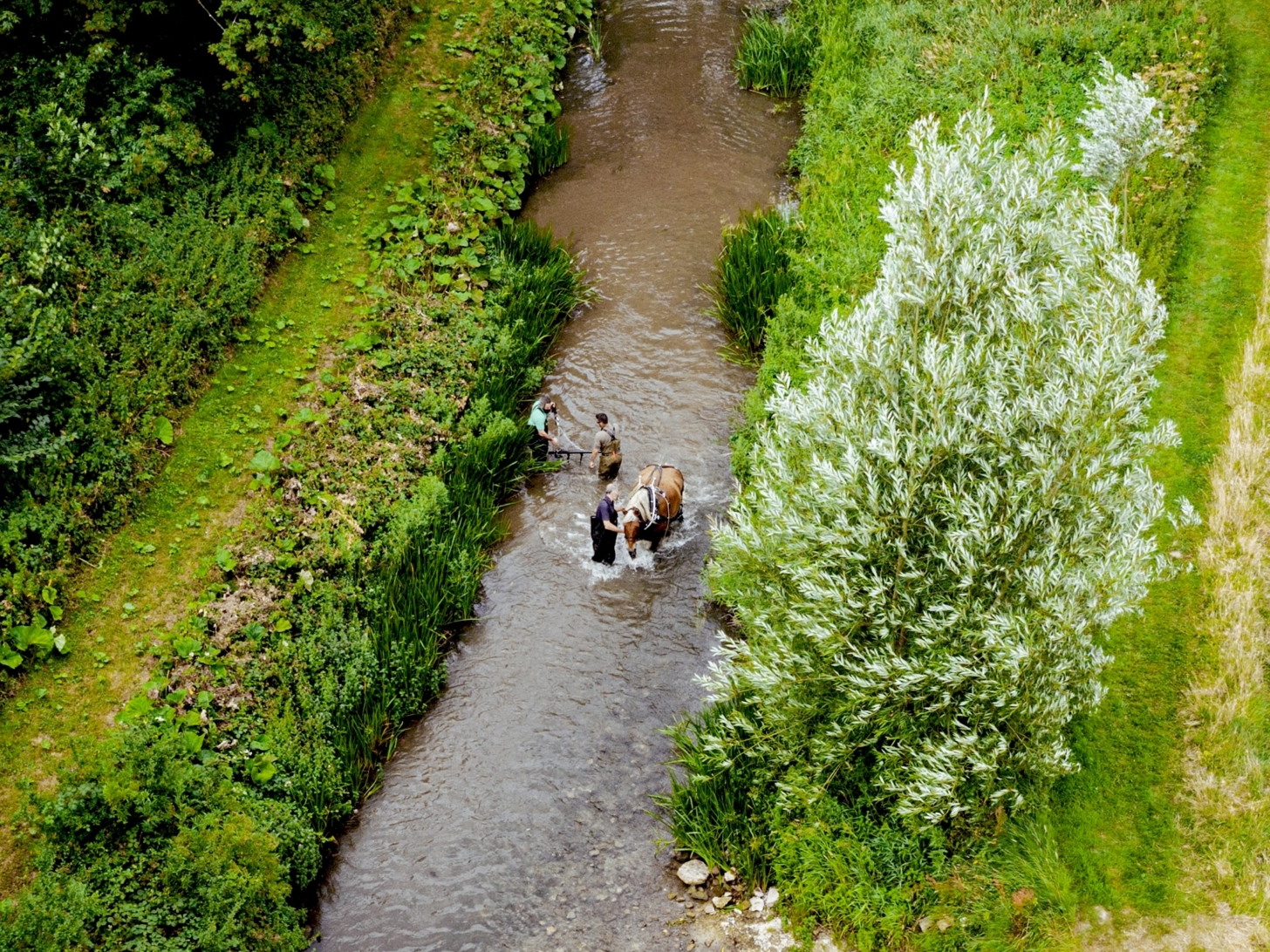
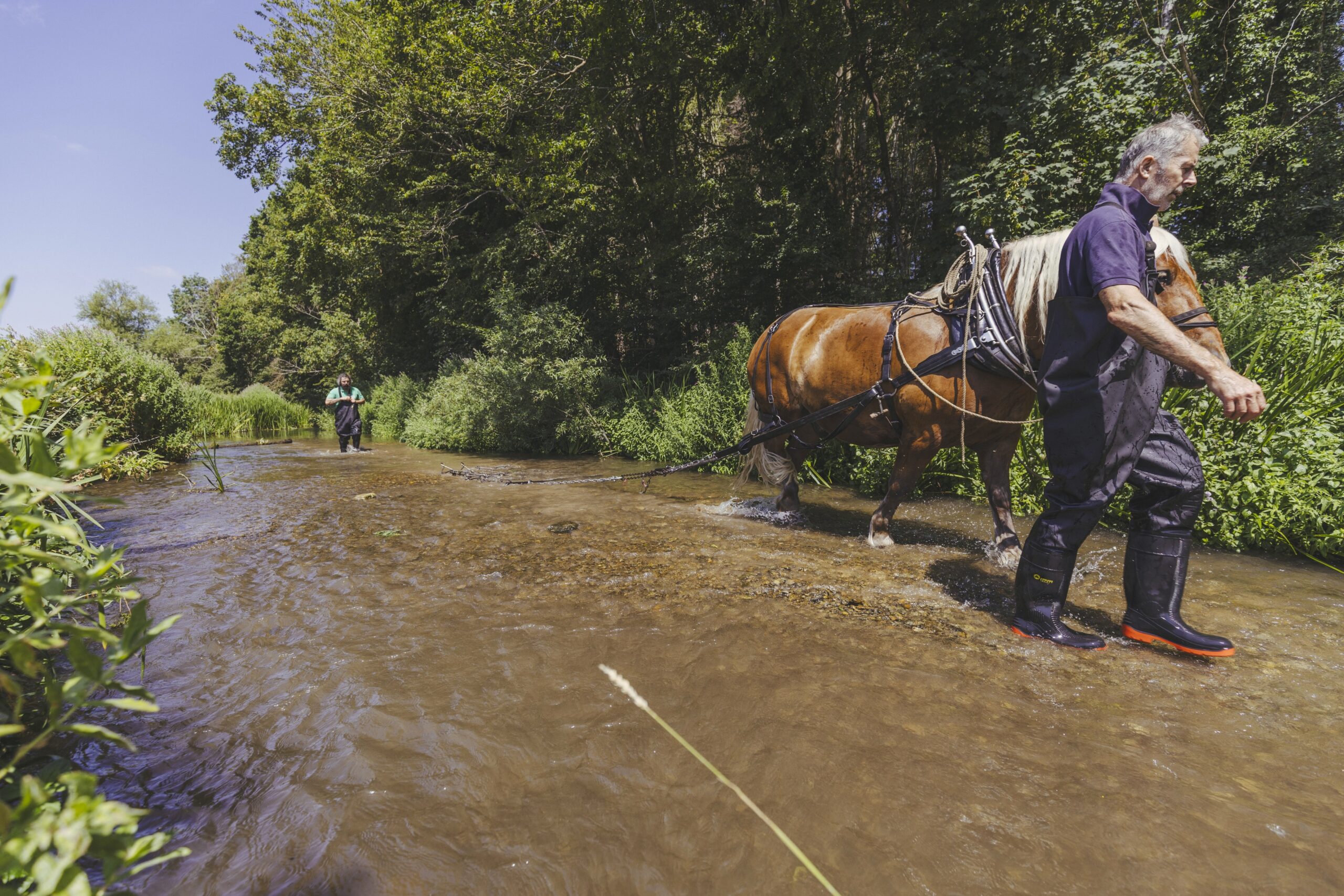
Fast-forward a few months, and that’s exactly what took place, as Harry proved himself once again to be a highly efficient workhorse, this time getting his feet wet in the river between Quenington and Fairford. After carefully introducing Harry to this new environment, his owner Dave was pleased to note that,
He took to it like a duck to water!
How does a horse improve river health?
Over time, the riverbed naturally becomes compacted with silt and sediment, with the high mineral content forming a crust-like surface that is detrimental to maintaining good river health. The action of Harry’s footwork, and his dragging of a harrow behind him, breaks up the riverbed, agitating the substrate and unclogging the fine particles. Crucially, Harry’s activity allows a well-oxygenated flow of water through the gravels.
Managing the riverbed habitat matters a great deal when trout begin spawning in November. The fish uses its tail to effectively dig what is called a ‘redd’ in the riverbed, where its eggs are deposited, then covered-up by the loose gravel, something that isn’t easily possible if the riverbed hasn’t been broken-up.
As River Keeper, managing the riverbed is an important aspect of Mark’s work, as indeed it has been for his predecessors over many decades of careful river management on this stretch of the River Coln,
I’ll often use a rake or a water jet to blast the riverbed.
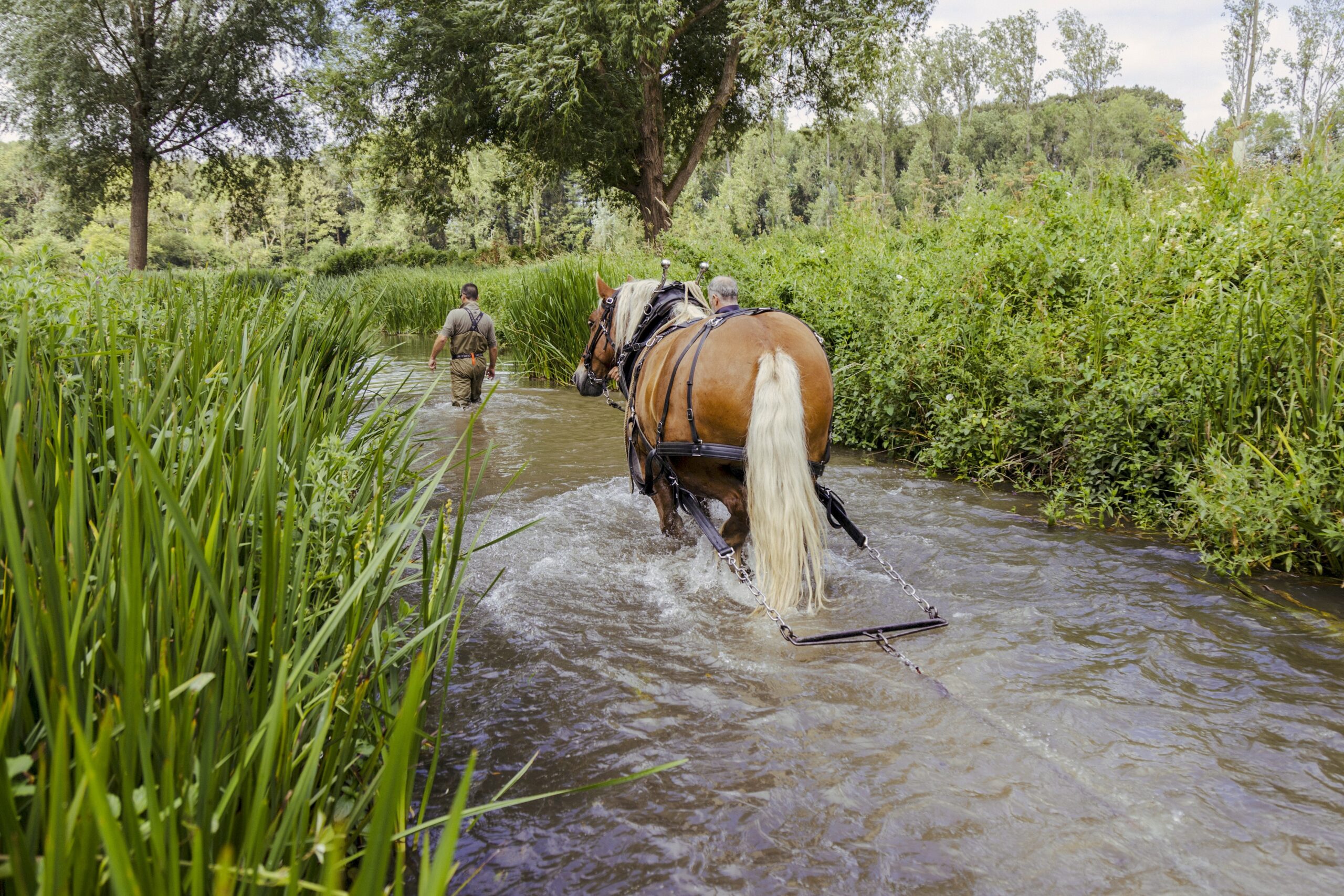
However, Harry‘s fancy footwork and harrow-pulling abilities have proved to be a highly efficient and effective river management tool,
…he can do 50 metres in ten minutes, which would take me most of the day!
A lighter touch for lower impact
Another clear advantage of using Harry is his relatively low impact. Using machinery such as tractors, excavators and diggers to do this work introduces a risk of fuel and oil spillages, damaging the environment. Harry weighs less than a big track machine, which coupled with his nimble footwork, means he’s an altogether more attractive method of river management, minimising collateral damage to the surrounding environment. When on site, staff at our nearby head office in Quenington are always pleased to come and see him at work.
You don’t get that with a JCB!
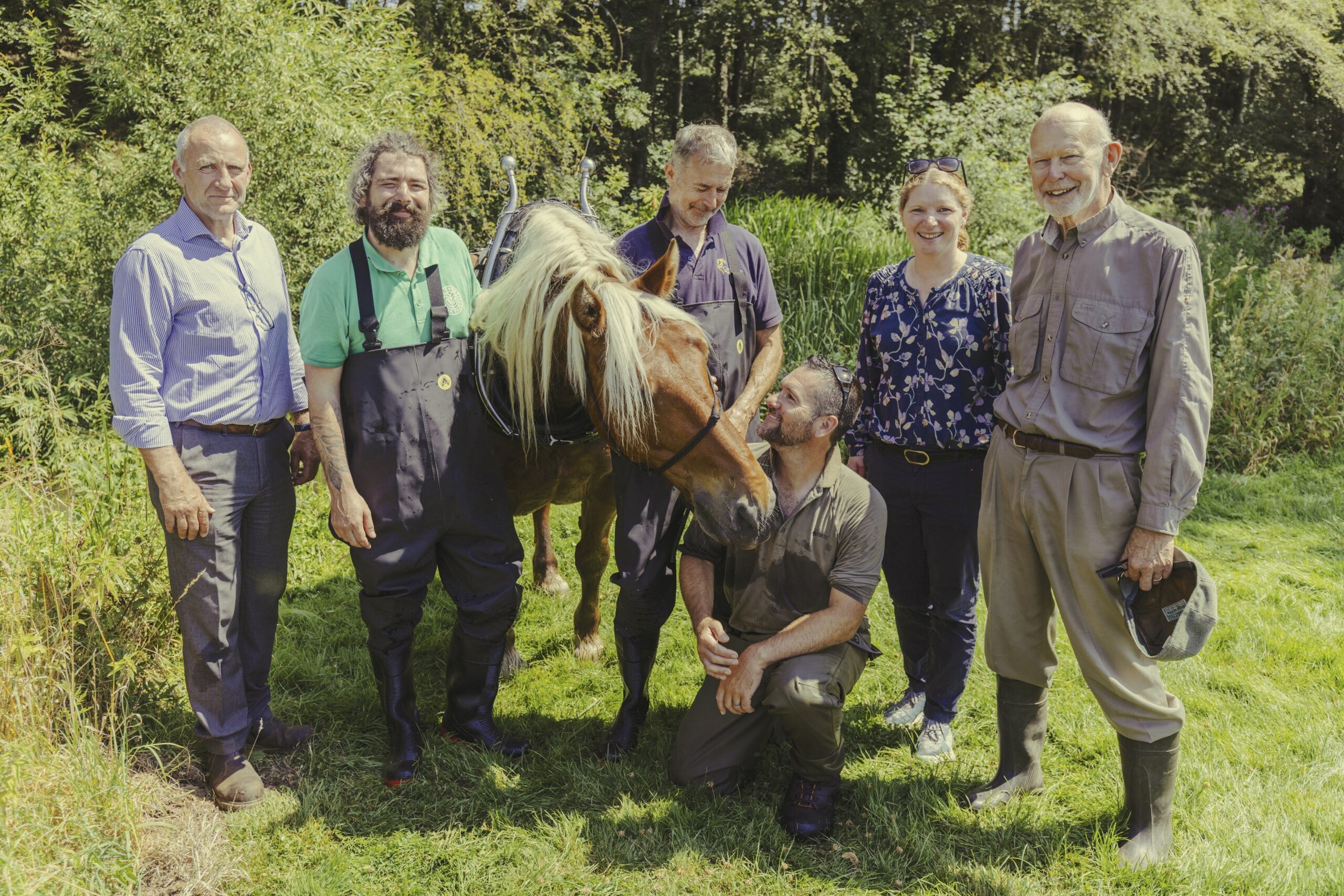
We’re excited at the prospect of seeing much more of Harry (and Dave!) as he continues this essential work on the river. In fact, his career in conservation looks set to continue into the winter, as plans to use Harry for larger-scale timber extraction work take shape, alongside his regular coppice clearing gig.
While Harry might not be the first thing that springs to mind when you think about river and woodland restoration, he’s proving that sometimes the best tool for the job has four legs, a good work ethic and a penchant for getting his feet wet!