The title “River Keeper” can be traced back to the middle ages in the UK. However, “Keepering” as we know it today really came about during the 19th century, when estates employed skilled fishery managers to look after their waterways. Trout fishing has long had a place on sporting estates, and in a similar way to a game keeper, who looks after the shooting on the estate, the river keeper oversees the fishing.
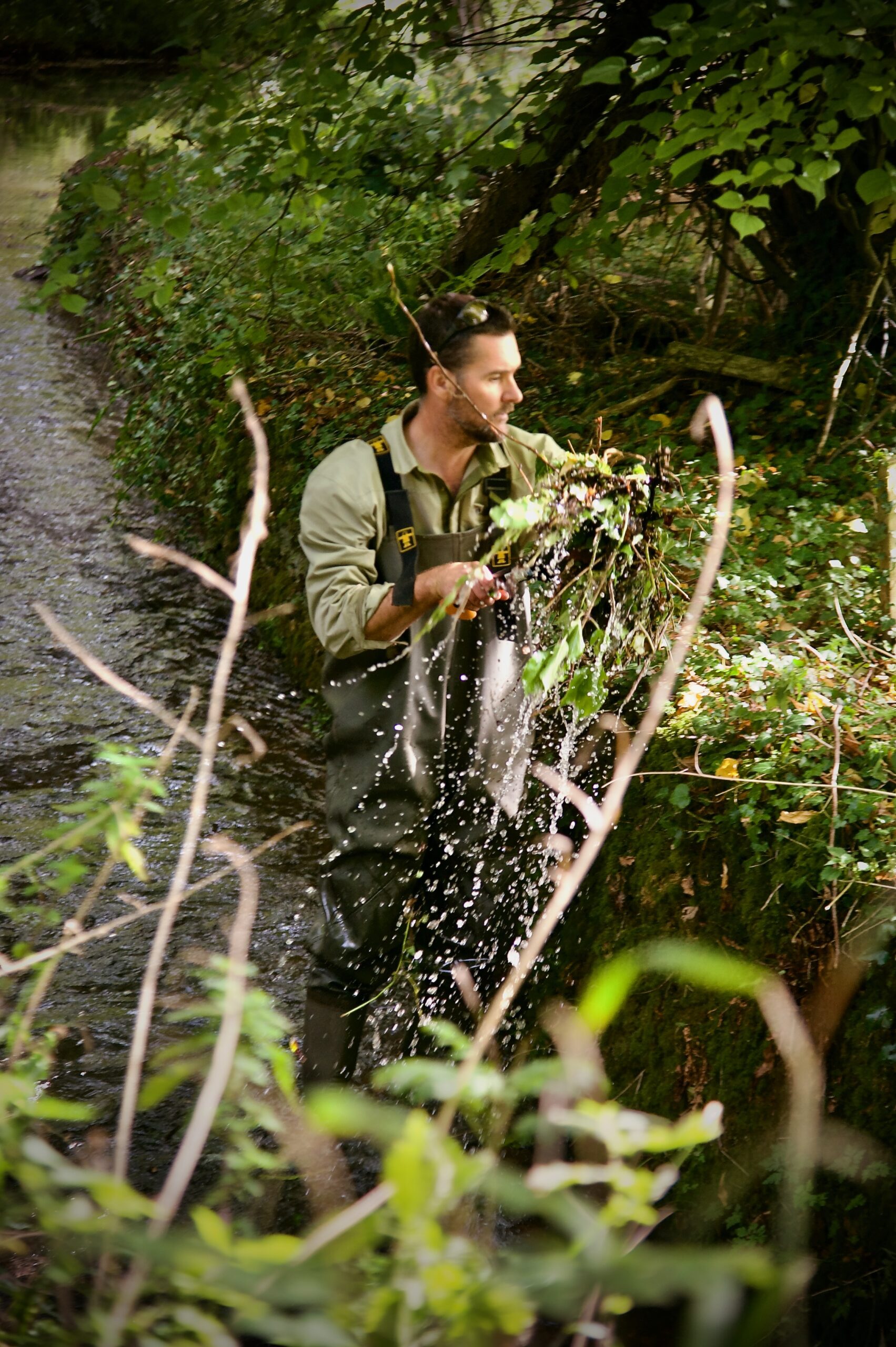
Predominantly, a river keeper’s role is to provide the opportunity for your rods (anglers) to fish along your beats. The tasks to facilitate this opportunity are many and varied: access must be maintained, trees and vegetation managed, fish may need to be reared and stocked, pests and predators need controlling, aquatic weeds need to be cut, habitat improvements need consideration, poachers are to be dissuaded, fishery rules to be enforced, communication with anglers to be maintained, in many cases the river levels and where it flows need adjustment…
The list goes on and on.
Over the years, fisheries have evolved, both fishing and management practices have changed, and perhaps most importantly, the way we view and look after our rivers is different. Many of the rivers that flow through these estates of old have been dramatically modified by man to serve a purpose. Channels have been straightened, hatches, sluices and weirs might have been installed, perhaps a mill has been built, carriers may be added to take water in a different direction, and water meadows may have been created. These days, we are starting to see a far more progressive approach to river management. However, that doesn’t mean we can’t look back and learn something from our forebears.
In the 19th and early 20th century, river keepers would use horses to drag the river. There are a handful of reasons why they used this technique: to clear aquatic weed growth, to grade the riverbed, or perhaps to level it out and manage the flow. The one that piqued my interest was using a horse to pull a heavy chain harrow to clean the gravel.
This is where Harry the horse comes into the story.
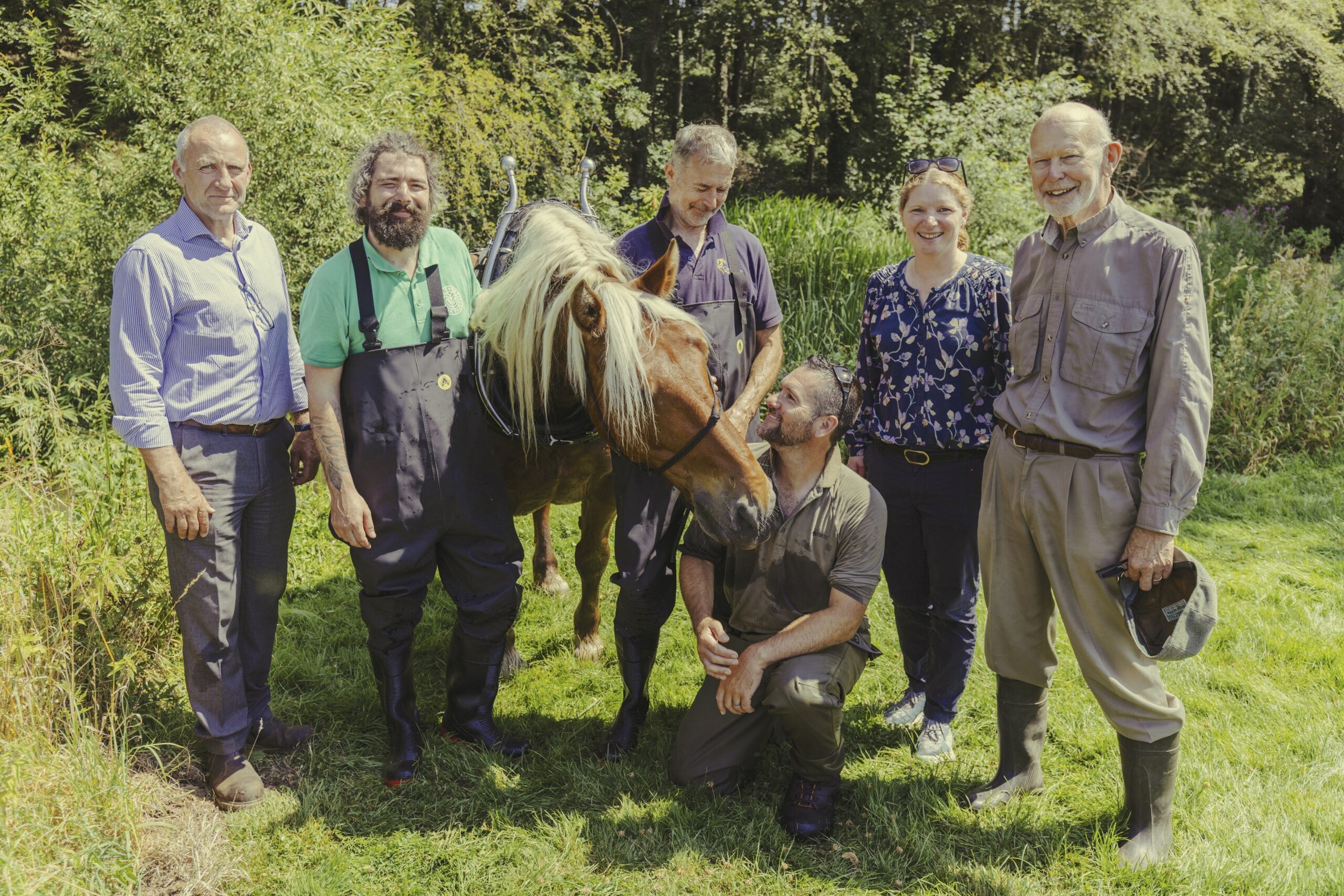
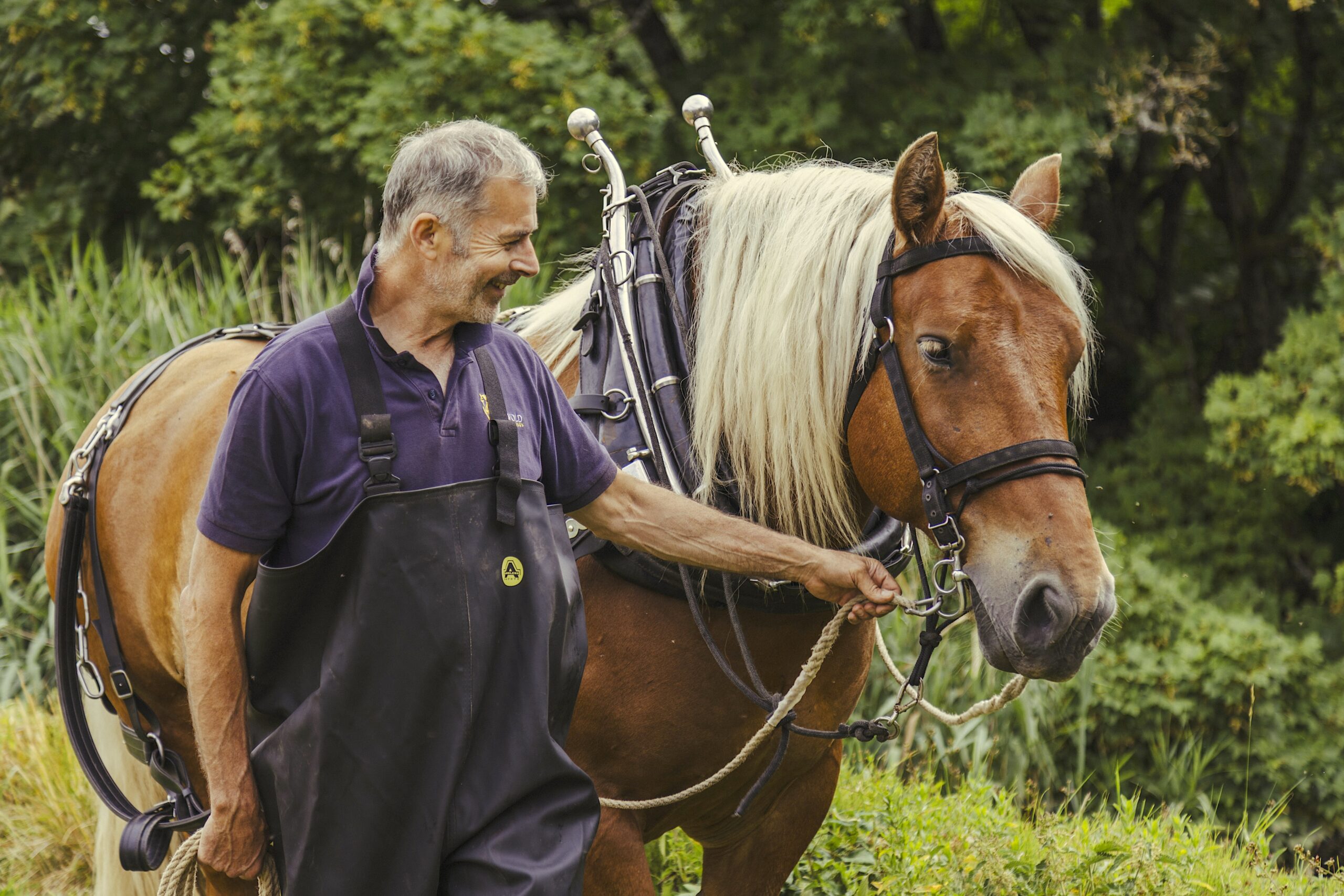
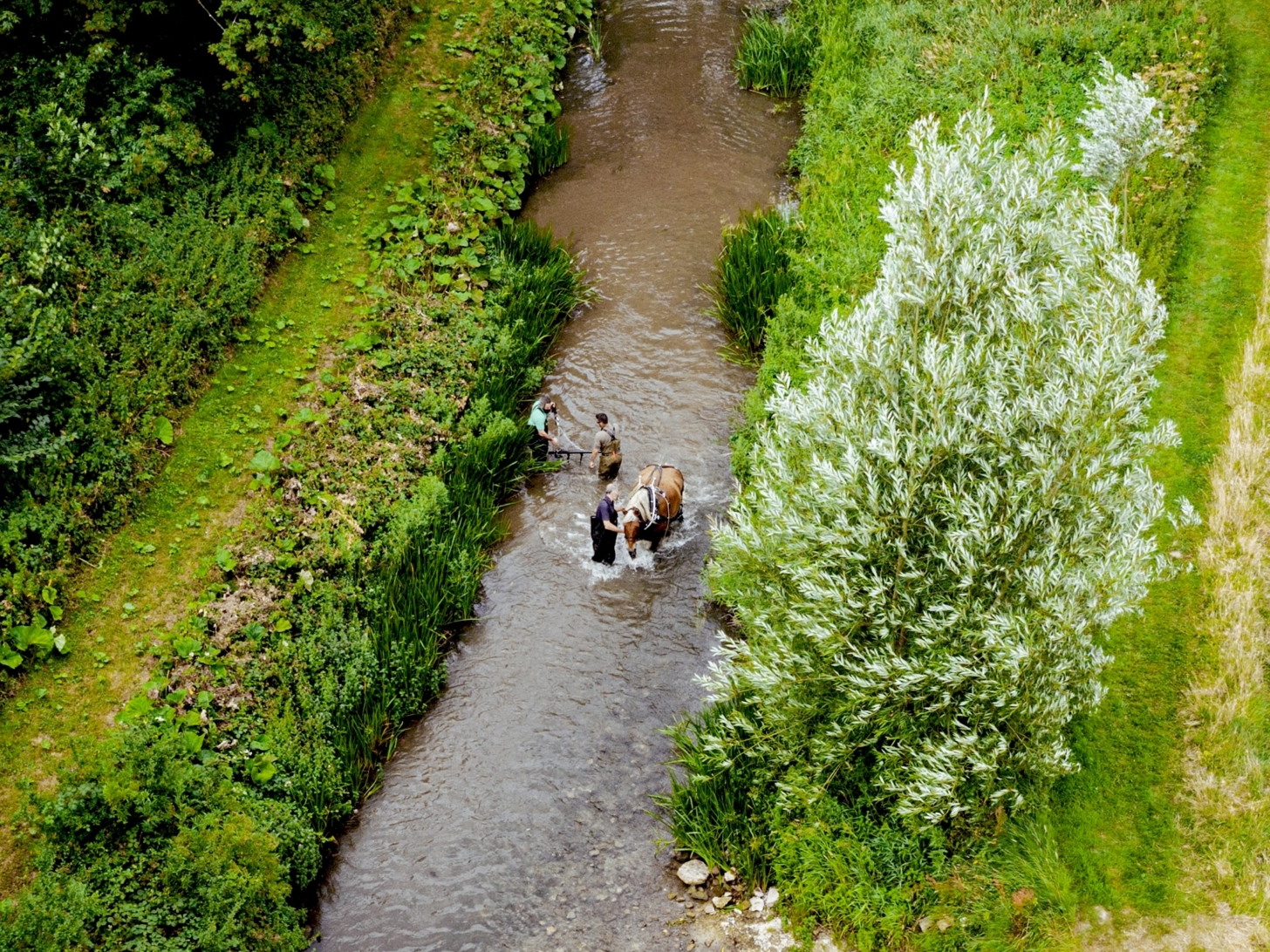
We already use Harry in the woodland here on the estate. Dave, Harry’s owner, brings him along during the winter months to help extract timber from some of our more sensitive sites. It was while working with Dave and Harry on some hazel coppice back in February that I had the idea to put Harry in the river. After a few conversations with Dave, he seemed confident that my plan would work. So, jumping forward several months, we found ourselves on the banks of the River Coln, leading Harry into the river for the very first time.
We had planned everything and walked the river with Dave the day before. We had chosen the site of an old cattle drink for Harry to enter the river as easily as possible. We didn’t want anything to spook the horse or to make things any more difficult than they needed to be on this initial step for Harry. I was really hoping that if things went well, I could make this a regular part of my management regime. If we got it wrong at this stage and made it a bad or frightening experience for the horse, then any future plans would have been dashed.
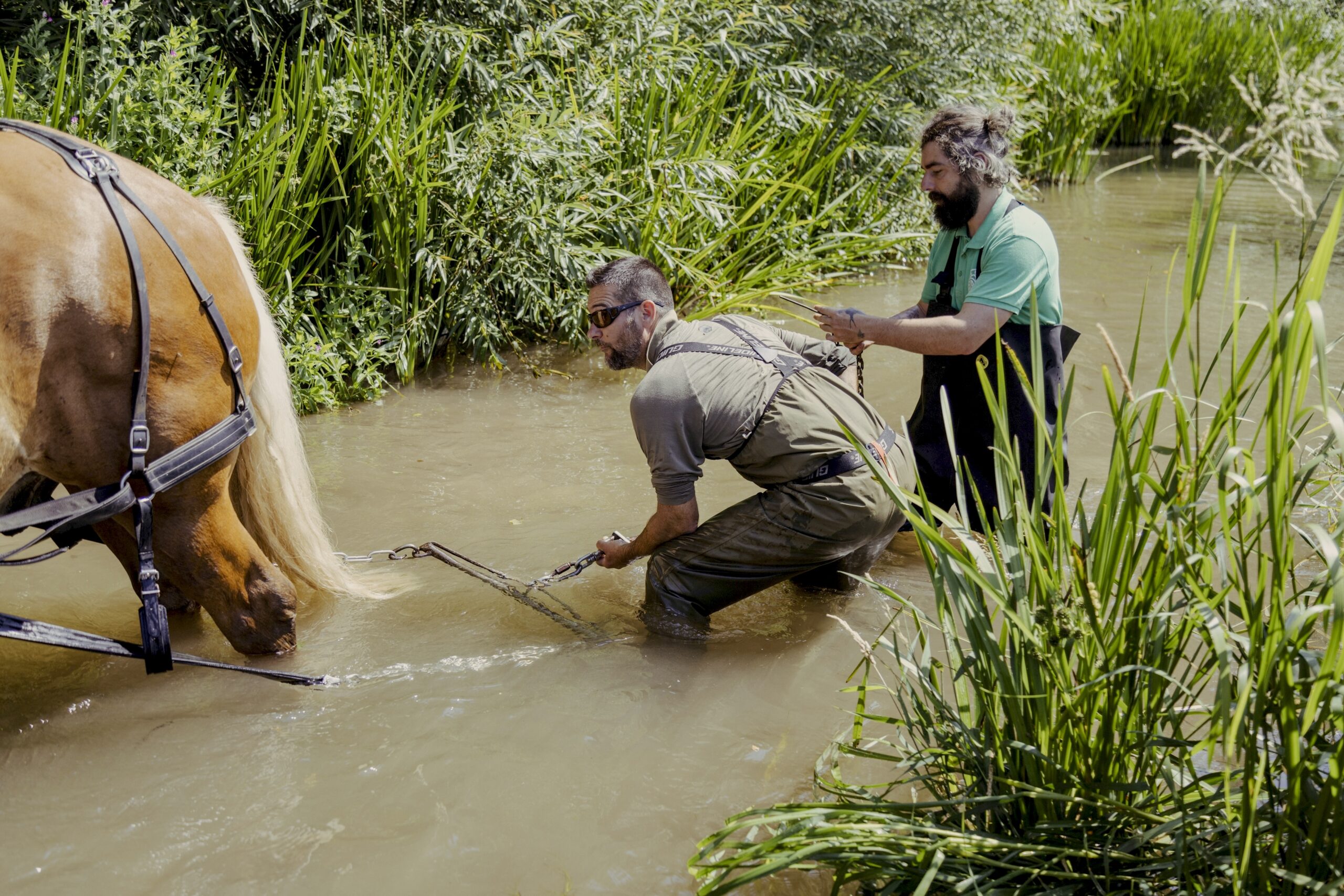
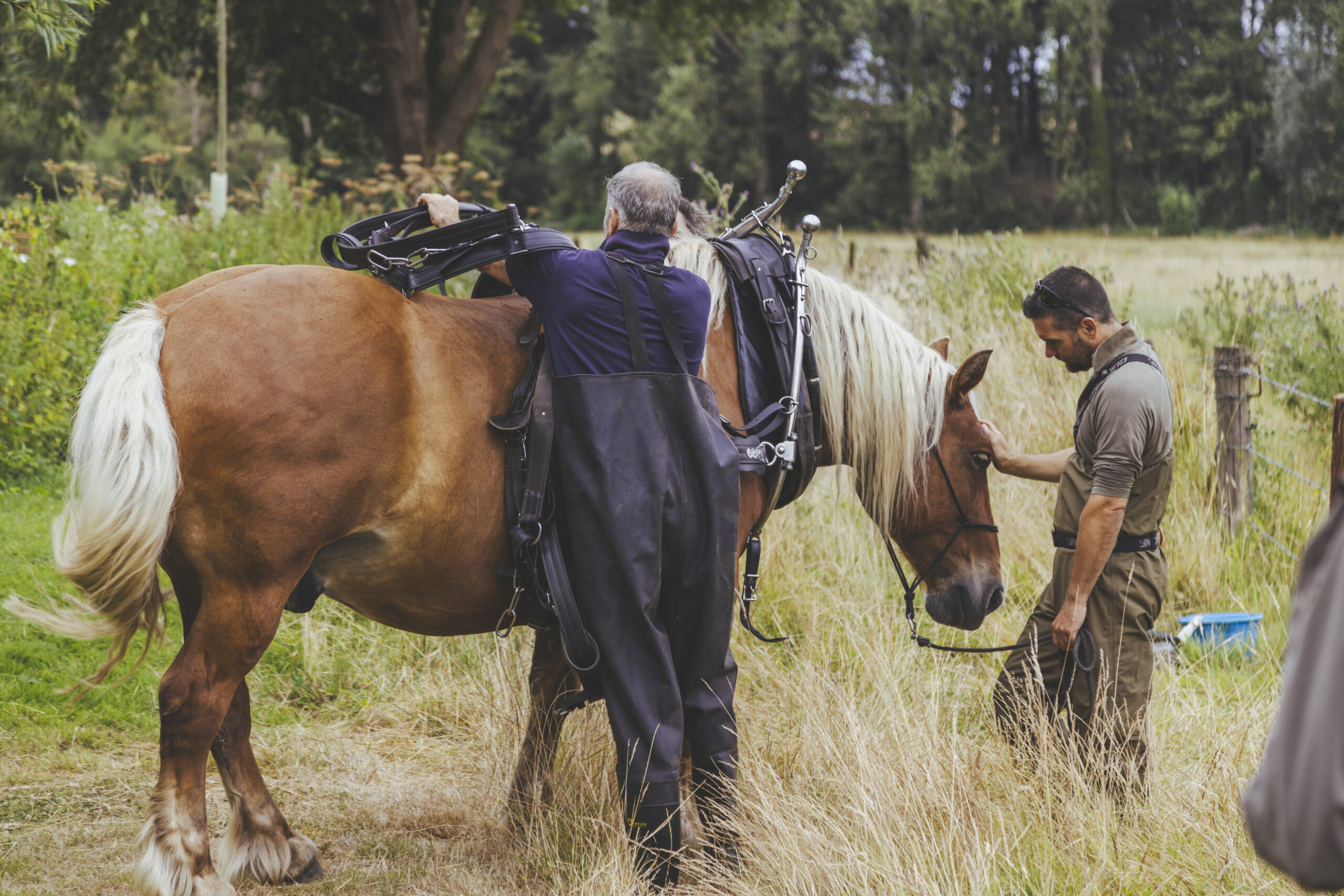
We began by grooming Harry next to the river; he loves this bit of pampering, and it simply helped to get him relaxed near the water. Next, Harry was tacked up with all of the equipment needed for him to pull the harrow once in the water. Then, Dave walked Harry along the footpath next to the river, while I was in the river walking alongside him. This, we hoped, would reassure Harry that the water wasn’t too deep to enter. It had been decided that if Harry was happy to enter the river, we would initially walk him up and down the section of river without attaching the harrow, just to build his confidence and further reassure him that it was safe.
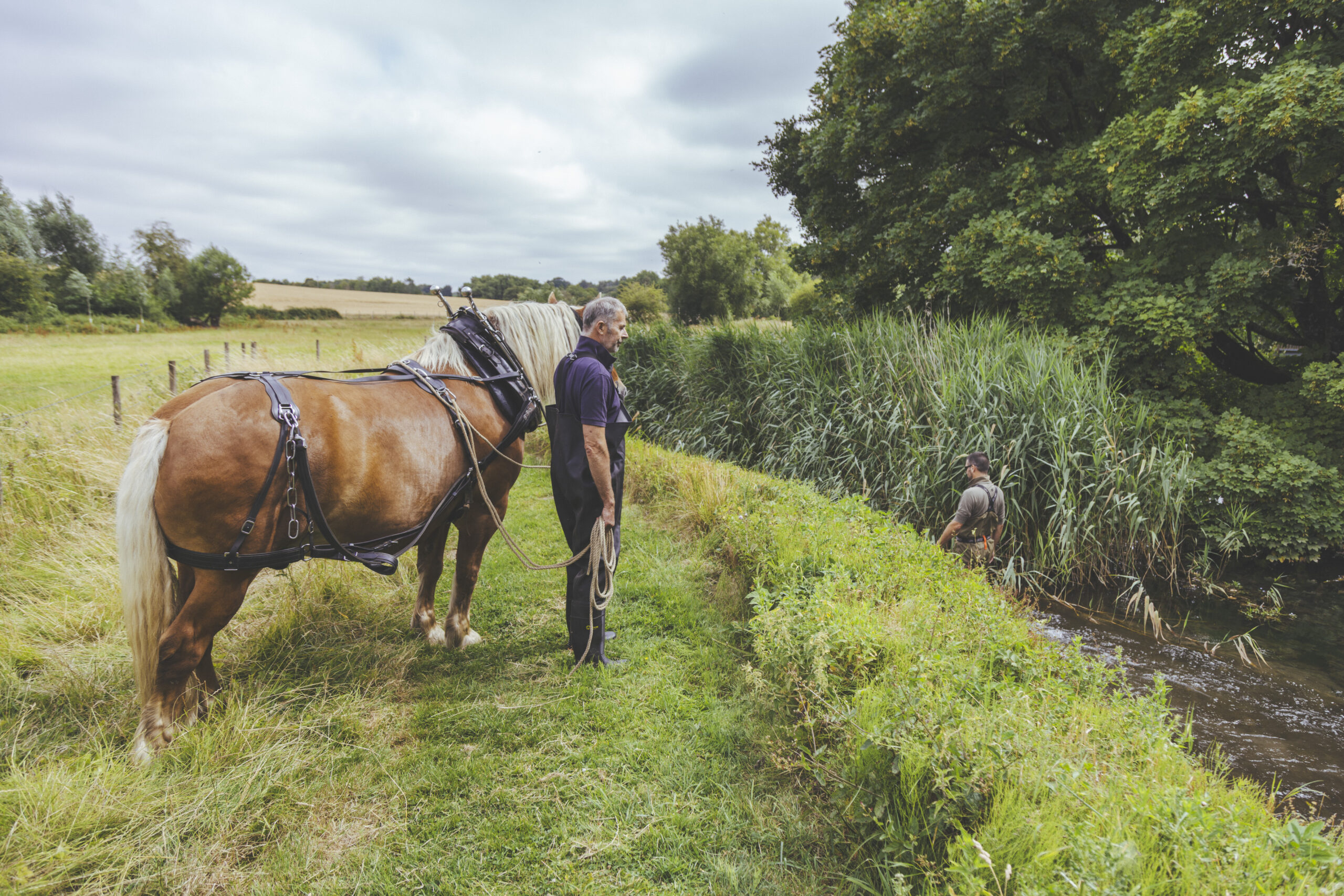
However, we hadn’t yet reached that stage of proceedings, and I was getting increasingly nervous that he would refuse to get in! Dave had already stated that he wouldn’t push Harry more than twice if he showed signs of being unhappy. I completely agreed with Dave, but in the back of my head I was thinking “I’ve sold this harebrained idea to the estate and if he won’t get in, I look like a right tool!”
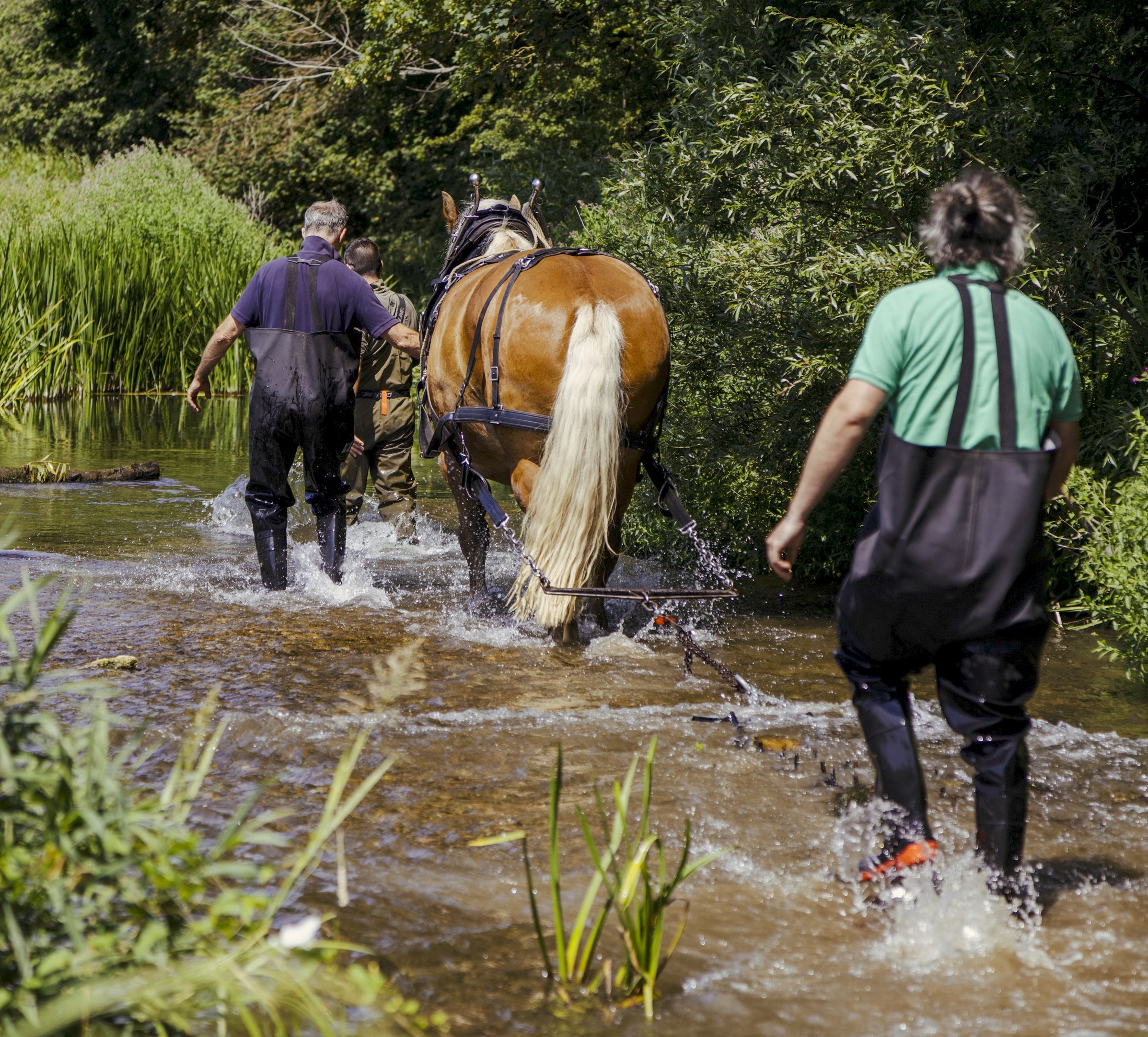
So, the moment came, I walked ahead of Harry as Dave led him to the water’s edge, there was the slightest of hesitations from the horse as the first hoof went in, but he hardly even broke his stride! He was in and off up the river like he had been doing it forever. The rush of excitement was incredible; to be walking through the river ahead of three-quarters of a ton of working horse was amazing.
Not a single day on the river is taken for granted, but this really did feel like a particularly special moment.
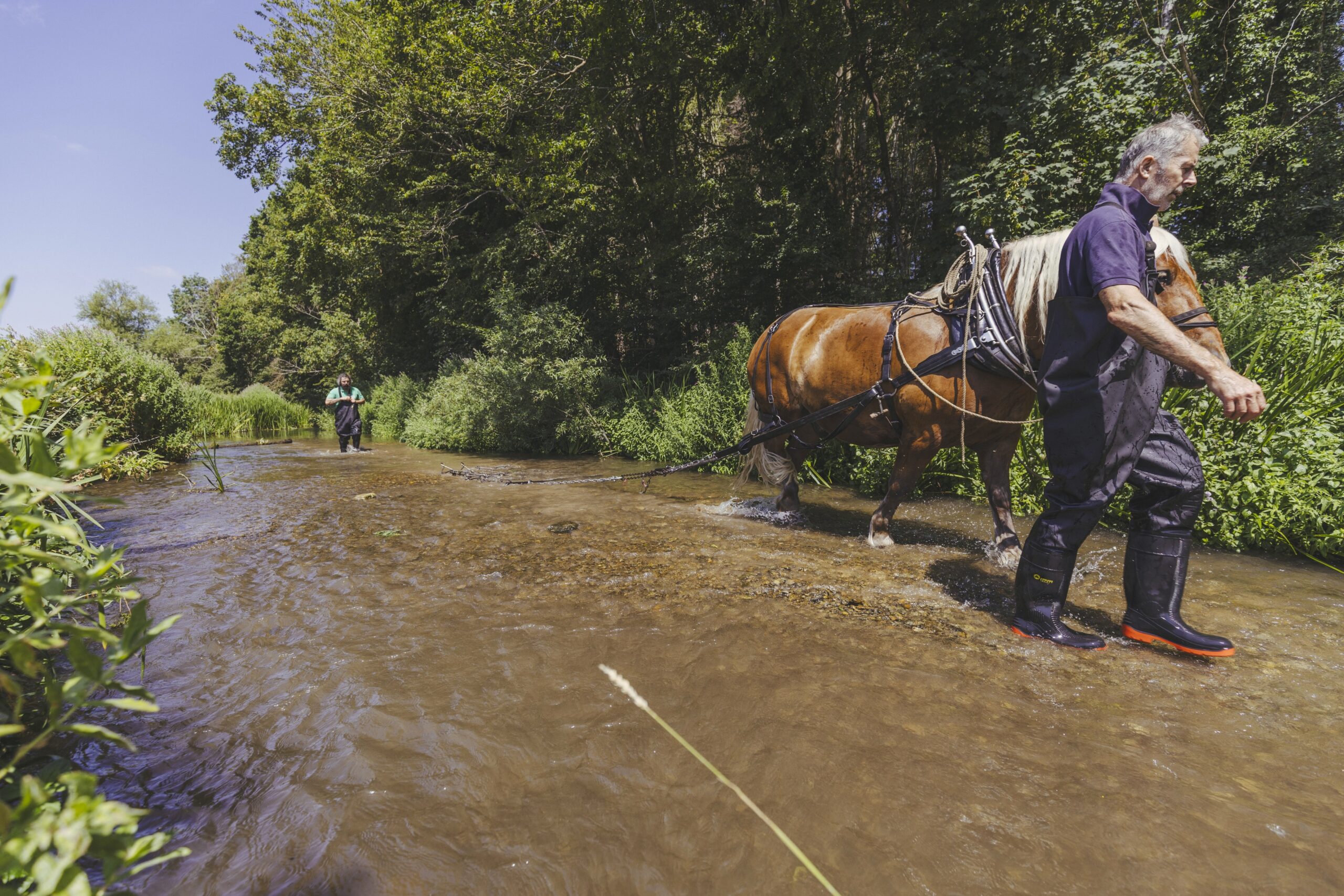
For the rest of the morning, Harry did his thing and followed me through the water without a grumble. With Dave at his side, he pulled the harrow up and down the river with ease, cleaning silt from the gravel and improving the spawning substrate with each and every step.
As midday approached and the temperatures climbed, we called it a day. Harry was posted up in the shade and rewarded with a good wash down and plenty of treats. I found myself looking back and thinking about all the keepers who had used this technique before and the generations that have passed since the last time a sight like this was seen on a river.
Of course, there are other methods and modern equipment for carrying out this task, but to preserve some of our rural heritage is far more important to me.